



Anteral Academy 15: What Happens Inside an Anechoic Chamber?
Anechoic chambers play an essential role in antenna testing and RF measurements. But how do they work, and why are they so important?
In this edition of Anteral Academy, we explore how these specialized environments help engineers accurately characterize antenna performance.
What Is an Anechoic Chamber?
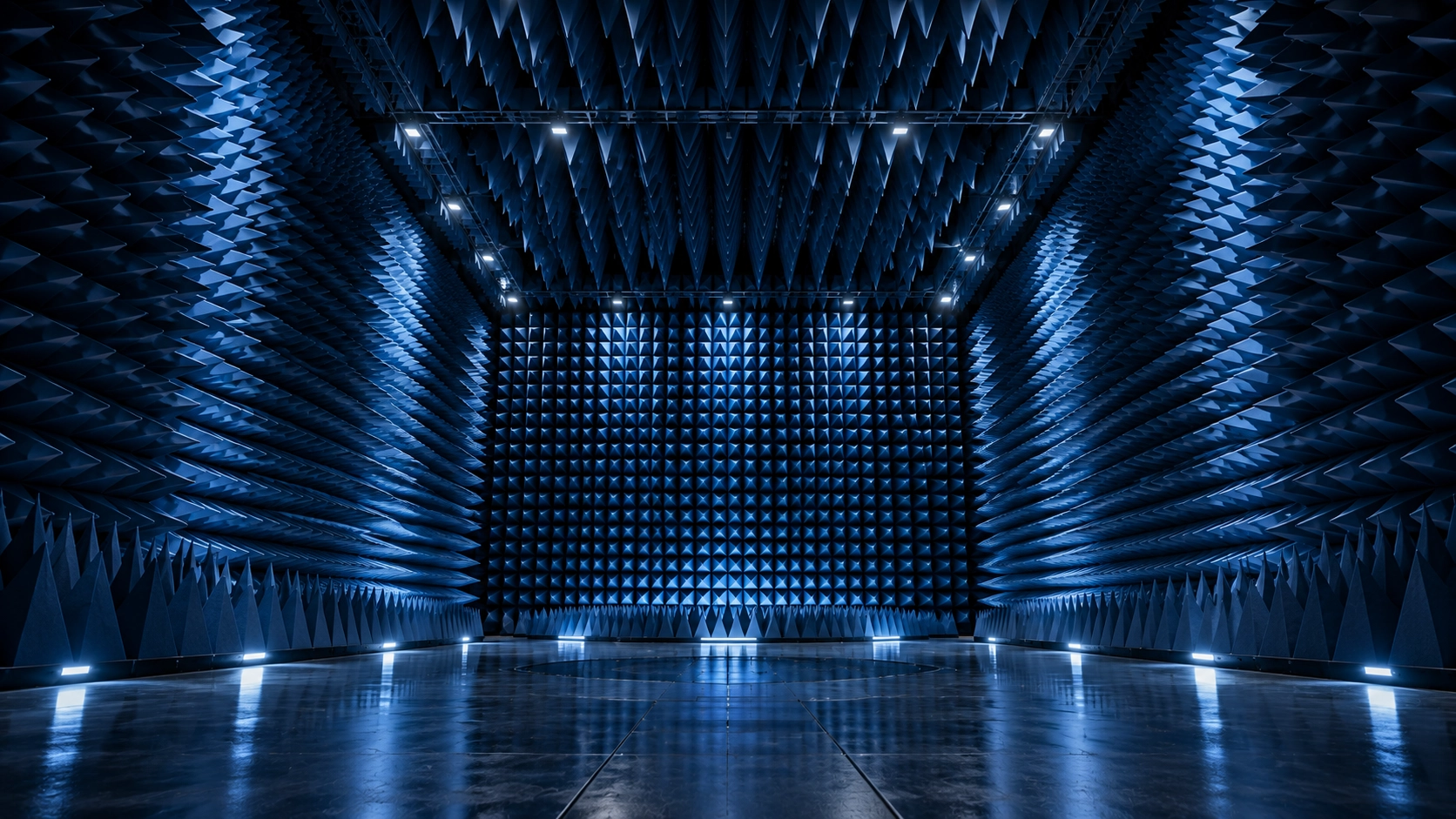
An anechoic chamber is a controlled environment designed to minimize electromagnetic wave reflections, allowing engineers to test antennas and RF devices under reliable and repeatable conditions.
Its walls are covered with pyramid-shaped electromagnetic absorbers, designed to absorb radio waves and reduce unwanted reflections. Some chambers also provide electromagnetic shielding against external interference.
What Can Be Measured Inside?
Anechoic chambers are used to evaluate key antenna performance parameters, including:
- Radiation patterns: How an antenna radiates energy in different directions.
- Gain and directivity: How electromagnetic energy is distributed.
- Polarization: The orientation of the electromagnetic field.
- Impedance matching: How efficiently RF power is transferred to the antenna.
These measurements are essential for understanding antenna behavior and validating designs before real-world applications.
Precision Drives Performance
Accurate antenna characterization is a key part of developing reliable, high-performance RF systems.
At Anteral, we design and develop advanced antenna and RF solutions, where precision and engineering expertise are essential to achieving optimal performance.
Keep exploring RF technology with Anteral Academy!
Want to learn more about RF technology and antenna engineering? Follow us on LinkedIn to discover more Anteral Academy insights, technical content, and updates on our latest projects and innovations.
Recent Comments